Energy Shock or Inflation Spiral? Understanding Why CPI Hit a Three-Year High

"Why has CPI jumped to the highest level in three years?"
In answer to that question, i would like share the just-released Consumer Price Index report for April showed prices rising 3.8% over the past 12 months, the highest level since mid-2023.
Key Considerations
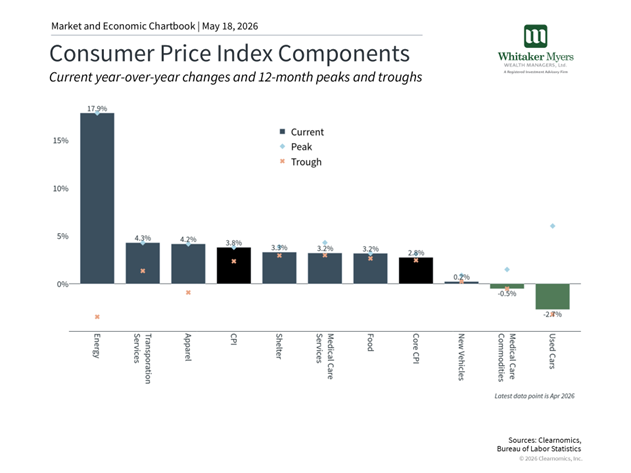
As expected, the primary driver of higher inflation is energy prices. The gasoline price component of CPI is up 28.4% year-over-year, energy overall is up 17.9%, and fuel oil has jumped 54.3%. This is all due to disruptions in oil flows through the Strait of Hormuz in the Middle East, which carries about one-third of global seaborne oil exports.
Core inflation is higher at 2.8%, but is less affected because it does not include energy prices. One measure of "supercore" inflation, which strips out food, shelter, and energy, is only 2.3%, suggesting the broader inflation picture is more contained. The All Items Less Energy index has increased only 2.8% as well.
The primary concern lies in energy prices staying higher, since this could push costs higher across other categories. There is some evidence for this already, particularly in areas like transportation services. Crude oil prices have fluctuated significantly over the past month, with Brent crude falling as low as $90 in mid-April before bouncing back as high as $118. Ultimately, this will depend on the war in Iran which is difficult to predict, particularly because ceasefires and peace talks have so far failed.
The Federal Reserve held rates steady at 3.5% to 3.75% at its April 2026 meeting, since multiple inflation measures remain above its 2% target. This complicates any plans to cut rates and, in fact, some believe the Fed may need to raise rates. Whether this happens is unclear, especially with the Fed changing leadership.
Despite this challenging backdrop, the S&P 500 has performed well this year. The energy sector is up over 25% and the Bloomberg Commodities index has gained about 30%. This emphasizes the importance of staying balanced across different parts of the market.
The included chart shows how different components of CPI have contributed to inflation over time, which helps illustrate that the current spike is heavily concentrated in energy rather than being a broad-based, economy-wide surge.
While the prospect of higher inflation can feel challenging, history shows that supply-driven energy shocks are often followed by price stabilization and market recovery. Maintaining a long-term perspective and a well-diversified portfolio remains the most reliable path through periods of economic uncertainty.